How the Iran–Israel Conflict Could Affect the Global Economy and Jobs in 2026

Jobrynt Career Team
Career & Job Market Analyst
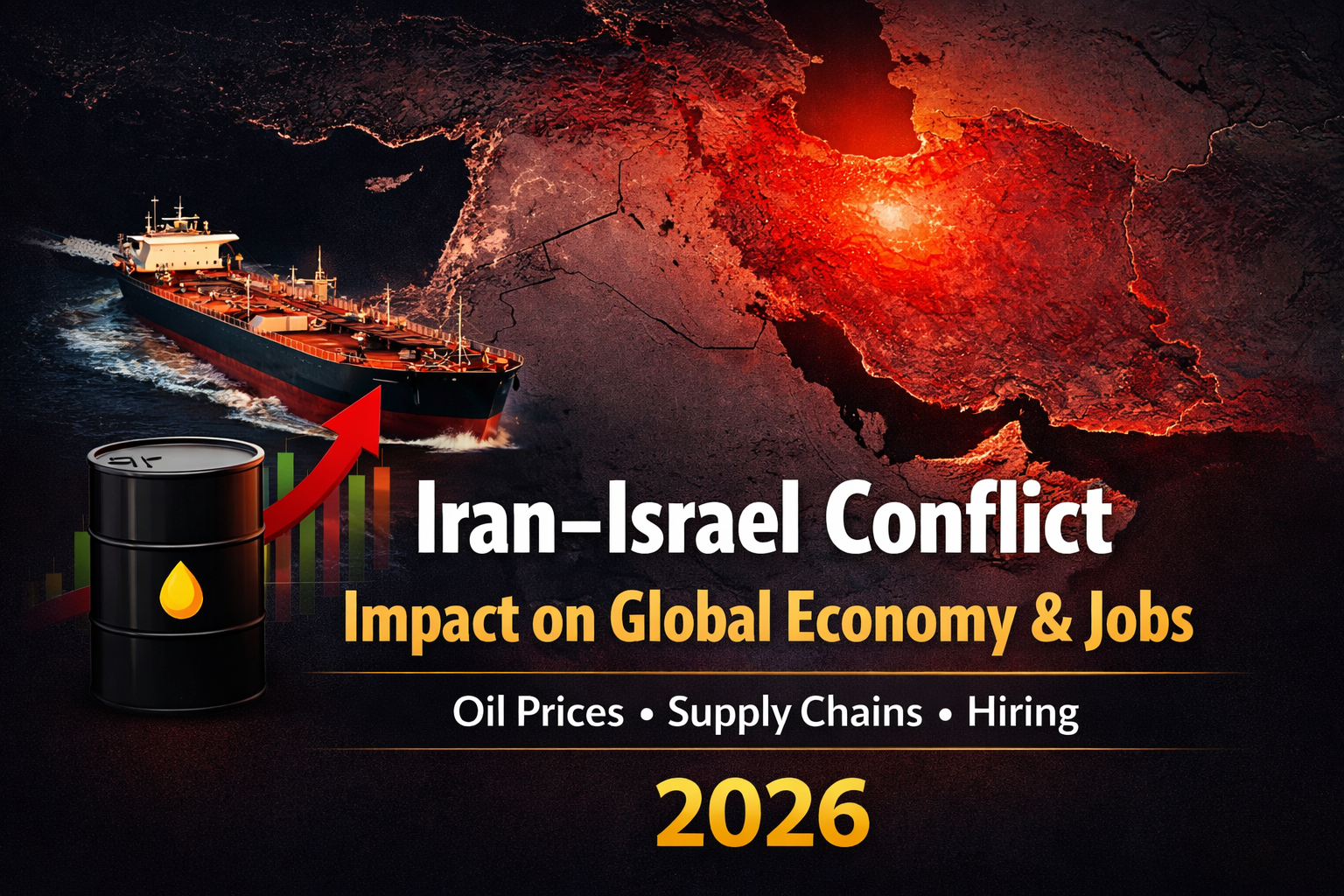
Global markets react as the Iran–Israel conflict disrupts energy supply, trade routes, and economic stability.
How the Iran–Israel Conflict Could Affect the Global Economy and Jobs in 2026
Introduction
The escalating conflict between Iran and Israel in 2026 has become one of the most significant geopolitical crises of the decade. While the war is centered in the Middle East, its impact is being felt across the global economy, financial markets, and job sectors worldwide.
From rising oil prices to supply chain disruptions and global hiring slowdowns, the consequences of this conflict extend far beyond the battlefield. Businesses, governments, and workers around the world are closely monitoring the situation as the war threatens trade routes, economic stability, and employment opportunities.
This article explores how the Iran–Israel conflict could reshape the global economy and job market in 2026 and what professionals should expect in the coming months.
Rising Oil Prices and Energy Market Instability
One of the most immediate economic impacts of the Iran–Israel conflict is the surge in global oil prices. The Middle East is a critical hub for global energy supply, and any military escalation in the region quickly affects global energy markets.
Recent reports show that oil prices have already surged above $90 per barrel due to fears of supply disruptions. Analysts warn that if the conflict continues, prices could climb even higher and potentially reach $150 per barrel. This dramatic increase in energy costs could trigger inflation across multiple economies.
A key concern is the Strait of Hormuz, one of the world’s most important oil transport routes. Nearly 20% of global oil shipments pass through this narrow waterway. Any disruption or closure of this route could significantly reduce global oil supply and create widespread economic shocks.
Higher energy prices affect everything from transportation and manufacturing to electricity costs, which ultimately increases the cost of living worldwide.
Global Supply Chain Disruptions
The conflict is also disrupting global supply chains. Shipping routes in the Persian Gulf have slowed or halted due to security risks, leaving thousands of cargo ships stranded or rerouted.
This disruption is affecting the global distribution of key goods such as:
- Electronics and semiconductors
- Pharmaceuticals
- Fertilizers and chemicals
- Consumer products
Major shipping companies are rerouting vessels around Africa to avoid conflict zones, adding weeks of delays and increasing transportation costs. This creates shortages and price increases in many countries.
Supply chain disruptions can ripple through industries, causing production delays and increasing costs for businesses worldwide.
Impact on Global Stock Markets and Business Confidence
Financial markets are extremely sensitive to geopolitical uncertainty. The Iran–Israel conflict has already triggered volatility in global stock markets.
Investors are reacting to rising energy prices, trade disruptions, and uncertainty about how long the conflict will last. Several sectors are particularly vulnerable, including:
- Airlines and travel companies
- Manufacturing industries
- Logistics and shipping companies
- Consumer goods producers
Large corporations are also facing rising operational costs and supply shortages. Some analysts warn that prolonged conflict could reduce global GDP growth and increase inflation in many economies.
As business confidence declines, companies may delay investments, expansion plans, and hiring decisions.
How the Conflict Could Affect Global Jobs
While wars often have immediate economic consequences, the job market impact tends to emerge gradually. Several key trends could shape global employment in the coming months.
1. Hiring Slowdowns
Companies facing rising costs and economic uncertainty often freeze hiring or reduce recruitment. Startups and tech companies in particular may slow expansion plans due to unstable markets.
2. Layoffs in Vulnerable Industries
Industries heavily dependent on global trade or fuel costs may face financial pressure. Airlines, shipping companies, and manufacturing sectors could experience layoffs if operating costs rise sharply.
3. Growth in Energy and Defense Jobs
On the other hand, some sectors may experience job growth. Energy companies, defense industries, cybersecurity firms, and geopolitical risk consulting firms could see increased demand.
4. Remote Work and Global Talent
Economic uncertainty may accelerate the shift toward remote work and international talent hiring. Companies may prefer hiring remote workers from lower-cost markets to control operational expenses.
Impact on Emerging Economies
Emerging economies are particularly vulnerable to geopolitical crises. Many developing countries rely heavily on imported energy and global trade networks.
Higher oil prices can strain government budgets, increase inflation, and reduce economic growth. Countries that depend on energy imports may face significant economic pressure if the conflict continues.
At the same time, inflation caused by higher fuel costs can reduce consumer spending, which further slows economic growth.
Potential Long-Term Global Economic Effects
If the Iran–Israel conflict continues for months or escalates further, the global economy could face several long-term consequences:
- Higher global inflation
- Slower economic growth
- Increased geopolitical tensions
- Reduced global investment
- Energy market instability
However, some economists believe that the long-term impact will depend heavily on the duration of the conflict and whether global oil supply routes remain operational.
Short conflicts often create temporary market disruptions, while prolonged wars can trigger deeper global economic shifts.
What Professionals and Job Seekers Should Watch
For professionals and job seekers, geopolitical crises like this highlight the importance of adaptability and skill diversification.
Key trends to watch include:
- Rising demand for AI and tech automation
- Growth in cybersecurity and defense technology
- Increased demand for supply chain experts
- Expansion of renewable energy jobs
Understanding global economic trends can help workers prepare for changing job markets and identify industries with strong future demand.
Conclusion
The Iran–Israel conflict is more than just a regional geopolitical crisis. Its economic impact is spreading across global markets, affecting oil prices, trade routes, financial markets, and employment trends.
While the full consequences remain uncertain, businesses and workers worldwide must prepare for potential disruptions in supply chains, hiring trends, and economic stability.
For professionals navigating today’s evolving job market, staying informed about global events and economic shifts is more important than ever.
As the situation continues to develop in 2026, the intersection of geopolitics, economics, and employment will remain a critical topic for governments, companies, and job seekers alike.
About Jobrynt Career Team
The Jobrynt Career Team shares expert career advice, job search strategies, hiring trends, and interview preparation guides to help job seekers find better opportunities faster.